As organisations modernise their application environments, a key challenge is managing separate technology stacks for traditional desktop virtual machines (VMs) and newer, containerised applications.
Operating these isolated environments introduces unnecessary operational overhead and limits agility. To solve this problem, Accops has launched a native integration between its flagship desktop virtualisation solution, Accops HyWorks, and Red Hat OpenShift Virtualisation.
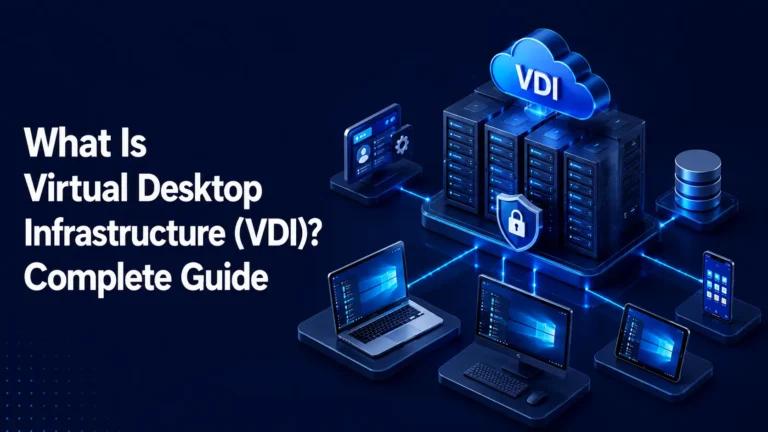
This strategic integration allows enterprise IT teams to run secure remote desktop infrastructure (VDI) directly on top of a unified, Kubernetes-based platform.
By bringing together application management and digital workspaces, organisations can simplify day-to-day administration without limiting infrastructure choices or forcing users away from their familiar desktop experience.
Why this integration matters
For business executives and IT leaders, maintaining separate systems for cloud-native tools and standard corporate desktops increases infrastructure complexity and licensing costs. Recent disruptions and restructuring in the virtualisation market have also made enterprises increasingly cautious about single-vendor lock-in and unpredictable pricing models.
By adopting Red Hat OpenShift Virtualisation as a certified infrastructure platform for Accops HyWorks, enterprises gain a highly flexible alternative. This integration arrives at a crucial time, providing a clear migration path forward as older platforms like Red Hat Virtualisation approach their scheduled end-of-support in 2026.
It allows technology leaders to lower operational costs through a straightforward subscription framework while keeping full control over infrastructure planning and deployment timing.
Understanding the integration
The backend architecture relies on native communication between the Accops desktop broker and the container platform. Instead of deploying virtual desktops on isolated hypervisor hosts, HyWorks connects directly to Red Hat OpenShift Virtualisation. This links user access controls to the infrastructure layer, treating each virtual desktop lifecycle as a native Kubernetes-managed object.
When an IT administrator sets up the connection in the central HyWorks management console, an authenticated link is formed with the OpenShift environment. This allows administrative tasks, desktop provisioning, and user allocations to run smoothly behind the scenes, ensuring that the end-user experience remains completely unaffected during the backend modernisation.
Core capabilities
This integration brings the underlying capabilities of Red Hat OpenShift Virtualisation directly into the workspace delivery matrix of Accops HyWorks:
- Dynamic Provisioning & Automated Scaling: The desktop broker connects directly to OpenShift’s automation layers to automatically spin up, provision, and scale virtual desktop pools based on real-time demand. This helps optimise hardware usage and removes manual capacity planning tasks.
- Unified Environment Management: IT administrators can manage traditional Windows and Linux desktop workloads from the exact same interface used for cloud-native container workloads, successfully eliminating historical operational silos.
- Inherited Platform Security: Virtual desktops automatically inherit OpenShift’s built-in security features, which include container isolation, network segmentation, SELinux enforcement, and automated vulnerability scanning. This works alongside Accops’ native Zero Trust client access controls.
- Elimination of Vendor Lock-in: The solution gives organisations a verified path to diversify their hypervisor stack, move away from rigid multi-year agreements, and shift toward a cost-effective, virtualisation-centric platform model.
- Modern Technical Readiness: Enterprises can confidently run traditional, business-critical VDI environments today while establishing a technical foundation capable of supporting AI workloads and microservices at their own pace.
What this means for enterprises
For C-suite executives, this integration offers significant operational consistency and commercial relief. Organisations do not need to invest in separate infrastructure silos or complex management tools to support both modern software development and standard business workspaces.
Market indicators show a massive shift in this direction, with the number of virtual machines managed by Red Hat OpenShift Virtualisation increasing by more than 250% since the start of 2024. This verified market adoption provides business leaders with the confidence to transition to a more agile framework.
For technical administrators, the model preserves granular control without adding complexity. Accops HyWorks handles end-user security policies, session connectivity, and data loss prevention (DLP) at the workspace boundary, while Red Hat OpenShift Virtualisation provides a secure, automated, and isolated environment at the data and hosting layers.
Who should evaluate it
This integration is relevant for organisations that want to expand or modernise VDI while maintaining freedom of choice across supported hypervisors.
- Technology leaders and CIOs looking to reduce virtualisation software spending and break away from restrictive hypervisor contracts.
- Infrastructure teams and EUC architects seeking to simplify administration by running virtual desktops directly inside a container orchestration platform.
- IT professionals looking to smooth their transition away from retiring platforms like Red Hat Virtualisation ahead of the 2026 deadline.
- Security officers who require a combination of Zero Trust workspace access and underlying container-level network isolation.
Strategic value
The importance of this integration goes beyond simple software compatibility. By pairing Accops HyWorks with Red Hat OpenShift Virtualisation, enterprises receive a production-ready option that combines the automation and elastic scaling of Kubernetes with secure digital workspaces. This successfully balances the day-to-day requirements of technical teams with the long-term cost, planning, and strategic flexibility required by business decision-makers.
For organisations reviewing their next infrastructure upgrade, this native integration represents a balanced, forward-looking strategy that protects current workspace availability while preparing the enterprise for future cloud-native architecture goals.
To explore the integration in more detail, including the documentation and high-level feature matrix, refer to the Accops HyWorks integration documentation.