Third-party access is now fundamental to how enterprises operate. Vendors, consultants, developers, auditors, and service partners routinely require access to internal applications and systems to keep business moving. In most organisations, this access is already governed through identity, roles, and time-bound permissions.
What increasingly warrants attention is not whether vendors should be granted access, but how that access is established and governed from the very first interaction.
In practice, vendor access is rarely broad or permanent. Vendors are typically granted access only to a limited set of specific applications for defined durations and are therefore kept outside the organisation’s AD. Managing such identities within core directories creates operational overhead and increases the risk of delayed deprovisioning in environments with frequent onboarding and offboarding.
Authentication therefore becomes the starting point for enabling secure vendor access without extending internal identity boundaries.
Instead of onboarding vendors into core directories, access can be provisioned using locally managed identities with MFA-only authentication. This ensures vendors remain clearly separated from internal users while being granted access strictly to the applications assigned to them, simplifying lifecycle management as access is created, modified, or revoked.
Strong authentication anchors access to an individual rather than just a set of credentials. By binding access to factors such as a registered device, fingerprint, or facial authentication, organisations gain confidence that the person accessing an application is the authorised vendor. This reduces the risk of credential sharing or informal delegation, without introducing friction into legitimate workflows.
With identity assurance established at this level, access can be scoped precisely and enforced consistently.
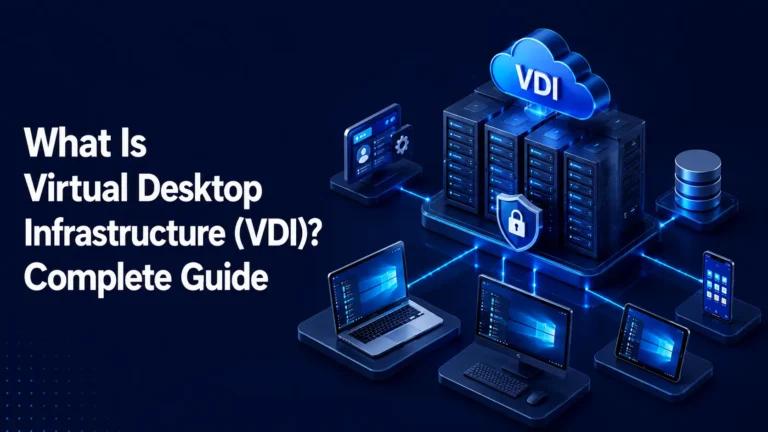
Vendor access is delivered through centrally governed digital workspaces, where applications execute within a controlled environment and are exposed only in the context authorised for each vendor. Application visibility is policy driven, ensuring vendors see only what they are permitted to use, while the endpoint functions purely as an access surface rather than a place where data is processed or stored.
This approach addresses a common challenge in modern IT environments: access often expands faster than control. By keeping execution and data handling centralised, organisations can define precisely how much access is required and limit exposure by default.
Data control is embedded directly into the access experience. Controls governing copy-paste, screen capture, screen recording, and downloads operate as part of workspace policy. Where sensitivity demands it, access can be restricted to view-only modes, ensuring that data remains within the governed environment throughout the session. Watermarking, protection against keylogging attempts, and on-demand file encryption reinforce accountability without disrupting legitimate work.
Internet access follows the same intent-based model. Instead of assuming unrestricted connectivity, access can be whitelisted on demand, limited to task-specific needs, and withdrawn automatically when no longer required. Browser isolation ensures that web interactions do not introduce uncontrolled data movement or expose either the enterprise environment or the vendor endpoint.
Peripheral interfaces such as USB and Bluetooth are centrally controlled, reducing the risk of accidental or intentional data transfer outside approved workflows. These controls are applied contextually and only when required, preserving flexibility while maintaining consistency.
Together, these mechanisms ensure that secure vendor access remains enforceable without over-engineering controls or slowing operations. On-demand data leakage prevention strengthens vendor access by governing data behaviour throughout the access lifecycle, rather than relying on detection or remediation after the fact.
Strong authentication, device validation, and contextual access decisions provide the foundation for this model. Detailed session-level audit logs capture who accessed what, when, from where, and how, supporting compliance, internal governance, and audit requirements without adding operational overhead.
Conclusion
Secure vendor access is ultimately defined by how effectively data remains governed while access is active. When authentication is established correctly and data control is embedded into the access framework itself, organisations can extend third-party access with confidence, reduce reliance on endpoint trust, and maintain clear visibility and audit readiness as collaboration scales.