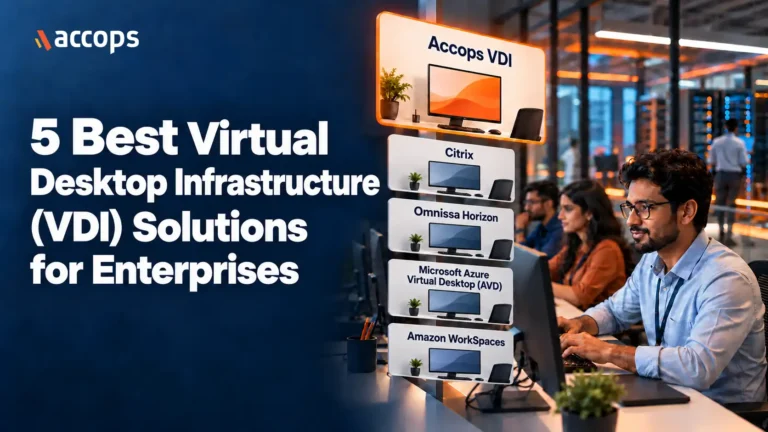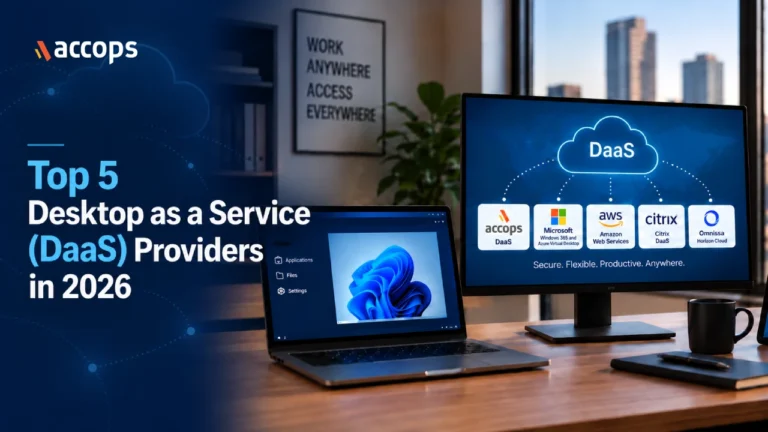
Navigating the hybrid work era
In today’s competitive business environment, organizations must adapt their strategies to accommodate the growing demand for hybrid work while maximizing output with equal or limited resources. This transition to a work-from-anywhere model requires solutions that enable employees to work seamlessly from various locations while maintaining the security and privacy of corporate data without overburdening the organization’s resources.
Virtual Desktop Infrastructure (VDI) offers a more secure alternative to traditional enterprise mobility methods. However, identifying an ideal VDI solution demands a comprehensive understanding of the unique challenges presented by hybrid work and an evaluation of the key factors contributing to a successful implementation.
Addressing hybrid work access challenges
To tackle the various challenges inherent in hybrid work, IT departments often resort to deploying multiple-point solutions, inadvertently creating technology silos, conflicting policies, increased complexity, and heightened risk. To overcome these issues, organizations must seek out a comprehensive, end-to-end solution that addresses hybrid work access and endpoint management without generating unnecessary complexities or incurring additional costs.
VDI vs. Traditional infrastructure
Compared to traditional physical end-user computing infrastructure, VDI delivers numerous advantages, including centralized storage and endpoint management. Nevertheless, it is essential to understand that merely adopting a VDI solution may not automatically resolve all hybrid work challenges. While VDI adoption does help organizations to attain enterprise mobility and business agility, end-user experience and IT infrastructure complexity often weigh against it. Thus, organizations must ascertain that their selected solution delivers a comprehensive, end-to-end strategy for hybrid work.
Essential factors to consider when evaluating VDI solutions
An effective VDI solution must address five critical factors: control, flexibility, simplicity, security, and economics. These factors ensure the VDI solution meets the needs of both the organization and its employees:
- Control: Implement rigorous, unobtrusive security features that allow IT teams to maintain control over data and applications without disrupting the end-user experience in a hybrid work environment.
- Flexibility: Enable employees to work from any location, using any device, and connecting over any network, fostering increased job satisfaction and productivity in a work-from-anywhere model.
- Simplicity: Provide a comprehensive, easy-to-deploy and manage solution that enhances the user experience and allows IT teams to focus on core business activities.
- Security: Ensure robust security mechanisms are in place to protect the VDI infrastructure and optimize the delivery of enterprise services, including access security, threat prevention, and data protection for enterprise mobility.
- Economics: Offer an all-inclusive solution suite that addresses hybrid work access, application virtualization, desktop virtualization, and more, without necessitating the integration of multiple expensive vendor solutions.
Achieving success with a comprehensive VDI solution for enterprise mobility
Accops VDI offers a comprehensive, end-user computing solution specifically designed to empower your hybrid workforce and facilitate seamless business operations with minimal IT involvement. The Accops product suite comprehensively addresses remote access, application virtualization, VDI, MFA, identity federation, SSO, thin client and DLP requirements.
By eliminating the need for multiple disparate products and lengthy deployment times, Accops delivers a pre-integrated solution suite that deploys rapidly and efficiently. The modular nature of Accops products ensures adaptability to cater to the diverse needs of various customers, while simultaneously providing a unified suite for accelerated deployments and rollouts. Moreover, Accops incorporates remote access and virtualization capabilities to facilitate access to web, client-server, legacy, and cloud-based applications while safeguarding data in use by users on endpoints.
Interested to learn more? We would be delighted to connect with you and cater to your unique requirements. Please feel free to reach out to us at workfromhome@accops.com, and our dedicated support team would be happy to assist you.