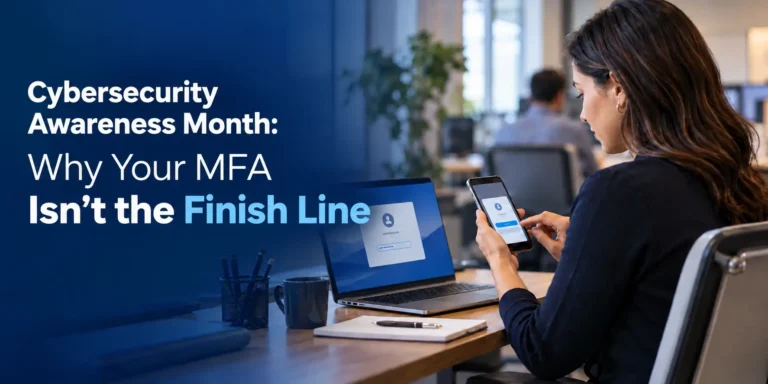
Enterprise authentication is under increasing pressure—not because of a lack of controls, but because passwords and OTP-based MFA are no longer effective against modern attack techniques. Even with measures like complexity rules and rotation cycles, passwords remain exposed to phishing, credential reuse, social engineering and automated attacks. OTPs introduce a second layer of verification, but they still rely on the same shared secret that adversaries know how to bypass.
To make matters more challenging, organisations also face growing operational friction with password-based systems—rising reset tickets, inconsistent MFA deployment, fragmented user experiences across devices and locations, and high IT overhead associated with supporting these methods.
Technology leaders are therefore focusing on authentication approaches that reduce reliance on passwords entirely and provide higher, verifiable identity assurance without adding user friction. Accops supports this shift by enabling organisations to adopt passwordless login in a structured manner that fits naturally within a Zero Trust framework.
Operationalising Passwordless
Not every user carries the same level of risk. A privileged administrator accessing critical infrastructure requires far stronger identity assurance than a remote salesperson or an operations associate—and password-based systems struggle to enforce this distinction consistently. Passwordless authentication addresses this gap by allowing organisations to match authentication strength to user sensitivity and access context.
For high-risk roles such as administrators, core banking operators or R&D engineers, Accops supports FIDO2-based passwordless login. This combines cryptographic authentication, phishing resistance, hardware-bound private keys and verifiable authentication records—removing reliance on shared secrets and significantly reducing credential-theft risk while giving leadership deeper confidence in identity assurance.
For the broader workforce, Accops enables QR-based passwordless login, where users simply scan a login QR and approve the request through the HyID app on their registered device. This removes passwords and OTPs, lowers reset volumes and delivers strong multi-factor assurance without adding complexity for users or IT teams, while also avoiding common OTP-related issues such as delivery failures, device switching and inconsistent enforcement.
Accops also strengthens security beyond the point of login. Once access is granted, the Digital Workspace continues to evaluate device posture, location changes, session behaviour and other contextual signals. If the risk profile shifts at any point, trust is re-validated and controls are enforced accordingly, ensuring that Zero Trust principles remain active throughout the user’s session and not just at the authentication stage.
Strengthening Compliance and Control
A structured passwordless model gives organisations a more consistent and predictable foundation for oversight than password or OTP-based methods, which are difficult to standardise, audit and supervise. Each authentication event is tied to a verified user action and an approved device, making it easier for security teams to demonstrate that access is legitimate and aligned with policy.
From a compliance perspective, passwordless aligns with the increasing regulatory expectation for phishing-resistant MFA across BFSI, healthcare, government and other regulated sectors. By providing reliable, tamper-resistant authentication records through the Accops platform, audit teams receive clearer and more consistent identity trails during reviews. This reduces ambiguity, supports non-repudiation requirements and strengthens the integrity of enterprise access governance frameworks.
Conclusion
Password-based authentication, even when paired with OTP-based MFA, can no longer meet the threat, scale and assurance expectations of modern enterprises. Beyond security limitations, these systems introduce operational complexity, inconsistent user experience and significant cost overheads.
Passwordless authentication offers a stronger, more reliable and more sustainable model—improving both user experience and identity assurance. By combining FIDO2 authentication for high-assurance roles with QR-based passwordless access for the wider workforce, Accops provides a practical, Zero Trust–aligned identity strategy that strengthens enterprise security posture, improves compliance and governance readiness and simplifies operational management.