Summary
Educational institutions are facing an unprecedented wave of sophisticated cyber threats targeting digital evaluation systems, student records, and operational infrastructure. Recent high-profile vulnerabilities involving the Central Board of Secondary Education (CBSE) and Joint Entrance Examination (JEE) Advanced platforms have highlighted the systemic flaws within traditional perimeter security frameworks. This blog explores why educational institutions have become prime targets for threat actors and explains how a Zero Trust security architecture effectively neutralises modern digital risks. By continuous contextual verification, strict identity controls, and application isolation, institutional leaders can safeguard academic integrity and protect critical data assets.
The digital transformation of the academic sector has drastically expanded the institutional attack surface, outpacing conventional security frameworks. When critical national examination portals and evaluation systems suffer data exposures, the vulnerability of the entire educational infrastructure is laid bare. Mitigating these systemic risks requires shifting from a porous perimeter-based security model to a strict Zero Trust architecture.
A Brief Overview of the JEE & CBSE Security Incidents
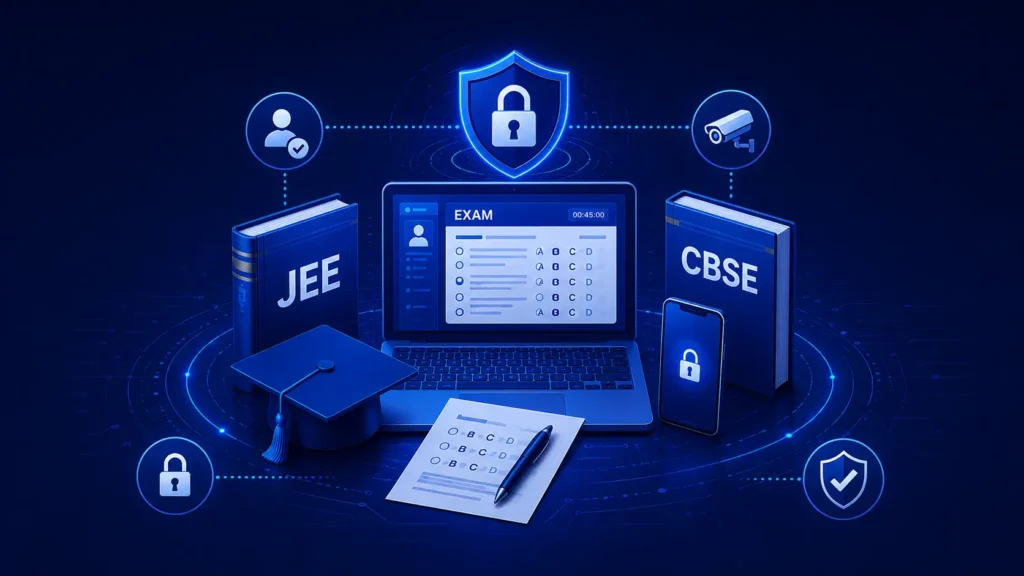
The integrity of high-stakes academic testing in India faced critical challenges due to significant data exposures and platform vulnerabilities across major educational frameworks. In early 2026, the Central Board of Secondary Education (CBSE) On-Screen Marking (OSM) digital evaluation platform was breached by an ethical hacker in just 30 minutes.
The system contained a hardcoded master password that granted total examiner access, allowing the potential modification of student grades, teacher details, and administrative bank information.
Concurrently, systemic infrastructure flaws exposed the Joint Entrance Examination (JEE) Advanced results ecosystem. A critical cloud storage misconfiguration left an Amazon Web Services (AWS) database bucket accessible via the ListObjectsV2 feature without requiring user authentication.
This oversight permitted external entities to view and download scanned candidate booklets and sensitive institutional files freely. Rather than being caught by internal security operations, these critical gaps were exposed by independent teenage researchers, proving that existing defensive postures are inadequate for high-stakes digital assets.
Why Educational Institutions Are Becoming Prime Cyber Targets
Educational establishments have evolved into exceptionally lucrative targets for threat actors globally. Unlike tightly regulated financial institutions, universities and school boards manage vast repositories of valuable personal data while operating under significantly constrained IT security budgets.
Criminal networks actively target these institutions because they house a treasure trove of Personally Identifiable Information (PII), intellectual property, and financial records, all behind comparatively weak digital defences.
The Growing Risk to Student Data and Digital Examination Systems
The rapid pivot toward digital examination systems, online grading, and centralised student enrollment databases has amplified the consequences of data breaches. When a platform like the JEE CBSE Security Incidents ecosystem is compromised, the fallout extends far beyond temporary operational downtime.
A compromised digital evaluation portal threatens the validity of national merit lists and directly undermines public trust in academic equity. Furthermore, the exposure of student PII creates long-term downstream security risks, leaving minors and young adults highly vulnerable to identity theft, financial fraud, and targeted spear-phishing campaigns that can persist for years.
Common Cybersecurity Gaps in Educational Institutions
The JEE CBSE Security Incidents serve as clear indicators of widespread security gaps prevalent across the education sector:
- Hardcoded Credentials and Weak Authentication: The use of shared administrative passwords or embedded master keys within web portals completely eliminates internal access barriers.
- Cloud Misconfigurations: Storage buckets and candidate databases are frequently deployed without enforcing baseline access controls or restricting public folder visibility.
- Unvetted Third-Party Vendors: Institutions routinely outsource platform development to external vendors without implementing continuous oversight, inadvertently outsourcing operational accountability.
- Privileged Access Abuse: Internal users and examiners are routinely granted broad, unmonitored administrative permissions that exceed their precise operational requirements.
Why Traditional Security Approaches Are No Longer Enough
The classic network security strategy relies heavily on a perimeter-based philosophy. This conventional methodology assumes that any user or device inside the institutional network is inherently trustworthy, focusing all defensive tools on blocking external entry points.
However, modern educational networks are highly distributed, accommodating thousands of personal student devices (BYOD), remote educators, and cloud-hosted SaaS applications. Once an attacker bypasses the external firewall via a single phishing email or a vendor credential exploit, the perimeter model allows them to move laterally across the entire network unhindered.
Understanding the Zero Trust Security Model
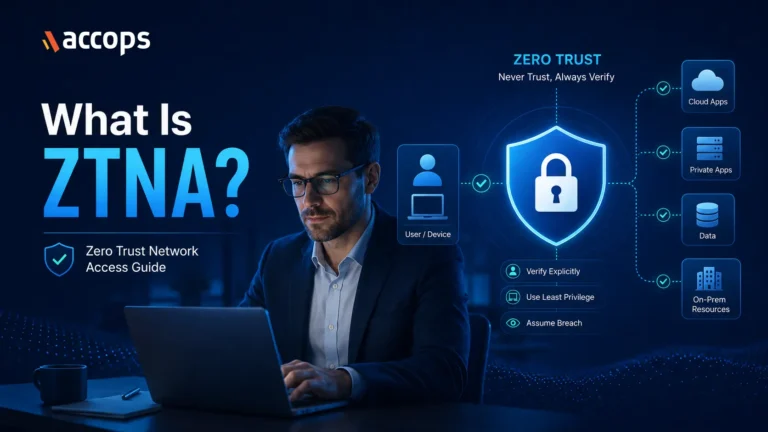
The Zero Trust security model completely discards the concept of implicit internal trust. It operates on a fundamental baseline: never trust, always verify. Regardless of whether an access request originates from a desktop inside the main administrative office or from a remote device across the country, every user, device, and session must be thoroughly authenticated, authorised, and validated before gaining entry to any institutional resource.
Core Principles of Zero Trust Security
A robust Zero Trust architecture is built upon three non-negotiable operational principles:
- Verify Explicitly: Every single access attempt must be continuously authenticated and authorised based on multiple contextual data points, including user identity, geographic location, device health posture, and service type.
- Use Least Privileged Access: Limit user access to only the specific applications and data required for their immediate role. This precise micro-segmentation ensures that if an examiner account is compromised, the breach is completely contained within that single tool.
- Assume Breach: Operate with the constant expectation that threats exist both inside and outside the network environment. Minimise the blast radius by strictly segmenting networks, encrypting all data in transit and at rest, and utilising real-time analytics to detect anomalous user behaviour.
High-Risk Exposures in Global Education
The critical need for architectural reform is heavily backed by empirical data. According to the comprehensive UK Cyber Security Breaches Survey data published by GOV.UK, educational establishments are significantly more likely to experience a breach or attack than standard businesses.
Specifically, an alarming 91% of higher education institutions and 60% of secondary schools identified active cyber breaches or attacks within the surveyed timeframe. Crucially, 30% of these higher education establishments reported being actively targeted on a weekly basis, with phishing and compromised credentials serving as the primary entry routes.
This objective dataset highlights that the vulnerabilities exposed in the JEE CBSE Security Incidents are part of a widespread systemic crisis demanding robust architectural intervention.
How Zero Trust Protects Educational Institutions
Implementing a Zero Trust framework fundamentally changes how academic assets are defended. By decoupling applications from the public internet, institutions eliminate the broad visibility that allows attackers to scan for open databases or exploit vulnerable portal URLs.
Even if an evaluation portal contains an unpatched vulnerability, Zero Trust micro-segmentation ensures the application remains entirely hidden from unauthenticated users. This approach completely prevents lateral movement, ensuring a single compromised point cannot lead to a catastrophic, network-wide data exfiltration event.
Best Practices for Implementing Zero Trust in Educational Environments
Transitioning to a Zero Trust architecture requires a structured, practical approach tailored to academic environments:
- Enforce Contextual Multi-Factor Authentication (MFA): Mandate robust MFA for all staff, students, and third-party vendors, adding risk-based parameters like geo-fencing and device fingerprinting.
- Establish Device Posture Assessment: Prevent unmanaged or infected personal devices from connecting to sensitive institutional applications until they pass automated health checks.
- Implement Application-Level Micro-Segmentation: Replace broad corporate VPNs with targeted ZTNA solutions that connect authorised users directly to specific apps, rather than the underlying network.
- Maintain Granular Audit Trails: Log all user access requests and session activities to guarantee complete visibility and regulatory compliance.
The Solution: Accops All-in-One Secure Access Platform
Accops provides a comprehensive, purpose-built portfolio engineered to help educational institutions seamlessly transition to a Zero Trust architecture without complex network overhauls.
- Accops HySecure: Delivers advanced ZTNA capabilities by replacing high-risk traditional VPNs with secure application-level tunnels. It uses detailed contextual assessments, analysing user roles, device health, and geographic location to guard critical assets like evaluation systems.
- Accops HyID & BioAuth: Delivers identity verification via advanced multi-factor authentication and facial biometrics, ensuring that online examiners and students are exactly who they claim to be.
- Accops HyLabs: Enables universities to spin up secure, isolated virtual ICT laboratories, giving students controlled access to digital resources from any device while fully preventing corporate network exposure.
Conclusion
The high-stakes nature of the JEE CBSE Security Incidents confirms that perimeter-based defences cannot withstand modern cyber threats. For CIOs and CISOs within the education sector, adopting an architectural shift is an immediate necessity to protect institutional reputation and student data.
Partnering with a consolidated platform like Accops enables educational institutions to replace fragmented security tools with an integrated, zero-trust digital workspace, ensuring academic integrity remains uncompromised.
Frequently Asked Questions
Traditional VPNs grant broad network access upon entry, allowing risky lateral movement. Zero Trust Network Access (ZTNA) isolates the network and connects authenticated users strictly to authorised applications.
Yes. Solutions like Accops HySecure function as a secure overlay gateway, integrating seamlessly with current legacy systems, cloud environments, and active directories without requiring infrastructure overhauls.
It entirely hides the portal from the public internet using secure application tunnels. Users must pass strict identity and device health verification before they can access the login page.